


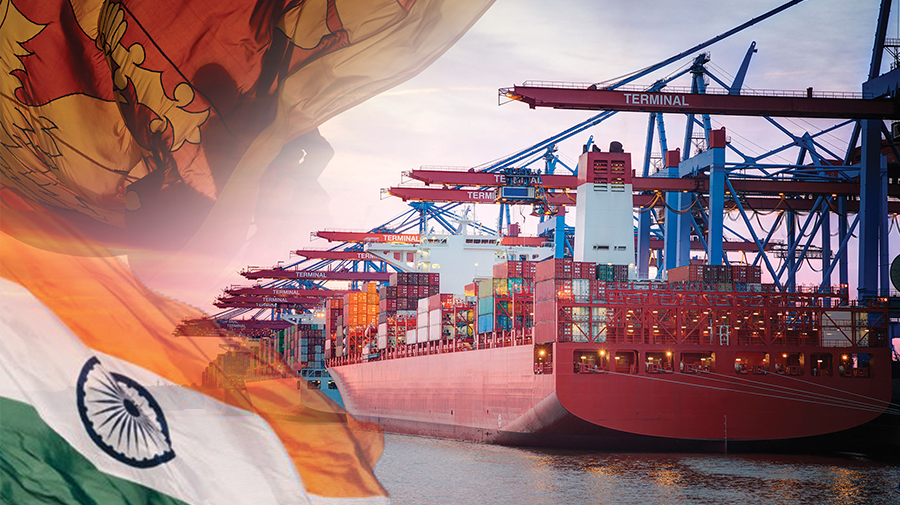
India's evolving trade strategy with ASEAN
India's Act East Policy, initiated in the early 1990s (previously Look East Policy), is a cornerstone of India's foreign policy to strengthen economic, strategic, and cultural ties with the Asia-Pacific region, particularly Southeast Asia. Free Trade Agreements (FTAs) play a central role in this strategy.
India's approach to trade policies, particularly in FTAs with the Association of Southeast Asian Nations (ASEAN), reflects a complex balancing act between protecting domestic industries and fostering international trade partnerships.
The India-ASEAN Free Trade Area (AIFTA), aimed to enhance economic cooperation by offering tariff concessions on goods traded between India and ASEAN countries. However, recent talks have focused on revising tariff structures to address disparities and improve trade flows, highlighting India's commitment to deepening economic engagement with ASEAN for mutual benefits and regional integration.
To be sure, ASEAN remains a crucial trading partner for India, accounting for 11 percent of its global trade, with bilateral trade reaching US$ 122.67 billion during 2023-24. The India-ASEAN Comprehensive Economic Cooperation Agreement (CECA) comprises three key agreements covering Goods, Services, and Investment. India’s trade with ASEAN experienced astounding growth after signing the ASEAN-India Trade in Goods Agreement (AITIGA).
The potential adjustment of tariffs is influenced by the need to protect burgeoning sectors within India's economy, aligning with the government's “Make in India” initiative to transform India into a global manufacturing hub. For instance, raising tariffs on mobile phone parts and automobile components could incentivise domestic production and reduce import dependency.
In the goods trade category, India eliminated import duties on approximately 74 percent of tariff lines and reduced duties on an additional 14 percent of tariff lines—highlighting one consolidated offer to ASEAN. At the same time, each ASEAN member made separate offers to India. This asymmetry in negotiation power also hinders India’s flexibility in protecting vulnerable domestic industries from competitive ASEAN imports.
ASEAN economies are inherently export-oriented with flourishing manufacturing bases. In contrast, India’s economy is significantly service- and agriculture-oriented, and it has not fully capitalised on the FTA, resulting in higher penetration of ASEAN countries into the Indian market. Indian exports have struggled to gain similar traction in ASEAN countries. Moreover, the inverted duty structure on certain items, like ferroalloys, aluminium, copper pipes and tubes, textile staple fibres, and several chemical preparations, puts Indian industries at a disadvantage.
To boost local manufacturing, India has implemented specific measures such as Production-Linked Incentive (PLI) schemes, higher import tariffs, and import monitoring, but several trade agreements negotiated earlier are seen as impediments. Domestic firms in India, particularly in the electronics and automotive sectors, have pressured the government to raise import tariffs to protect local industries, rooted in the desire to safeguard domestic manufacturers from cheaper imports and promote self-reliance and technological advancements.
The implications of such tariff hikes extend beyond immediate economic protection. By fostering a robust industrial base, India can create jobs, stimulate economic growth, and enhance technological innovation. However, it is crucial to implement these measures in a way that does not significantly disrupt trade relations in the region.
If you are a fresher in the Export field.
????Join our Startup Export Training.
For more details.
???? Visit www.ucorpexim.in or Contact 7598 404848
If you have basic about the Export field
????Join our Advanced Realtime Export Training.
For more details.
????Visit www.ucorpareto.com or Contact 7598 786858
#export #exporter #exportimport #exports #importexport #exportproduct #exportbusiness #exportbag #exportquality #exportindia #exporting #exportimportdata #eximedia #indiaexport #indiaexports #indiaexporters #indiaexportimport #indiabusiness #ucorpexim #exporttraining#exportstraining #exportertraining #exporterstraining #importtraining #importstraining #importertraining #importerstraining #ucorp

share News