


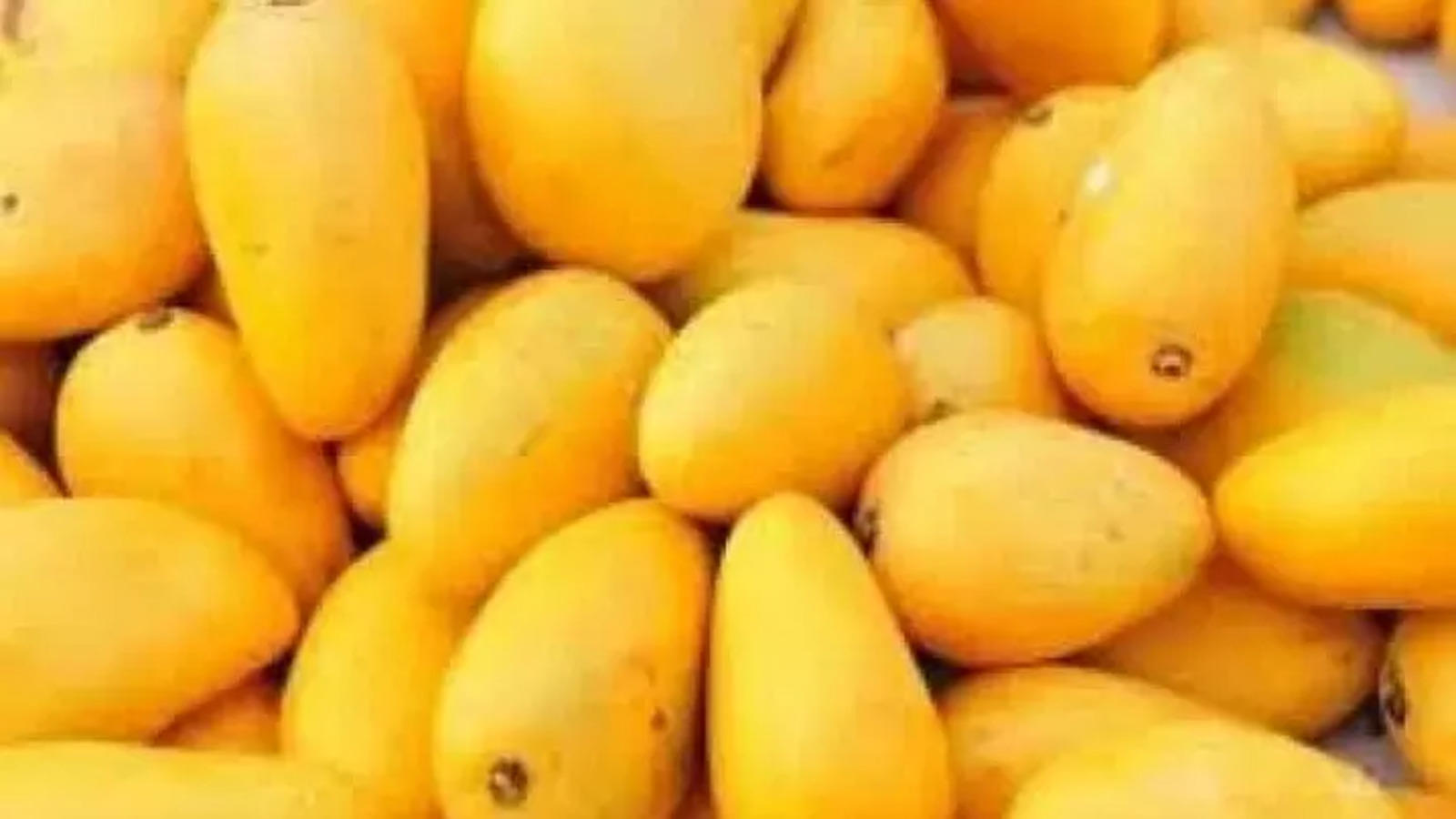
Mango: King in India, no kingdom abroad
Amroha/New Delhi: Nadeem Siddiqui caressing a mango is a sight to behold. He places a Chausa, a late flowering variety, on his palm to measure how well it is growing. He climbs a tree of the popular Langra variety searching for spots and pests on unripe mangoes. The black-rimmed glasses Siddiqui is wearing add to the seriousness of his probing eyes. Like a primate looking at his prized possessions.
Siddiqui climbs down from the 60-year-old tree and instructs the worker shadowing him to cover more fruits with protective paper bags to shield them from birds and flies. He is a third-generation grower from Amroha in Uttar Pradesh, a few hour’s ride from the national capital, Delhi.
So far, 2024 has been good for Siddiqui. “Last year, I lost close to ?50 lakh due to a freak hailstorm. This year I am hoping to recover the losses," he said, sitting on a charpai, under the shade of giant mango trees spread across the 25-acre orchard. The oppressive June heat, closing in on 50 degrees Celsius, is a little more bearable here.
Production in eastern parts of Uttar Pradesh has been lower this year due to adverse weather while growing areas in southern and eastern India have been hit by low yields due to untimely rains and prolonged heat stress.
For Indian consumers, the mango season spans four months—from April to July— with supplies peaking with rising mercury and ebbing with the progressing monsoon. This year has been pricey—the best varieties are in short supply, which means retail prices are upwards of ?100 per kg. One could still get prized southern or western varieties on ten-minute-delivery grocery apps—but those aams cost an arm.
At the orchard next to Siddiqui’s, a contractor oversees workers neatly arranging Dasheris in boxes that will be dispatched to India’s financial capital, Mumbai. But the fruits have been harvested two weeks ahead of maturity and so are less sweet and fragrant.
This annoys Siddiqui. “What will the consumer in Mumbai think of our Dasheri?" Quality is paramount for the grower and exporter, whose produce competes with the famed Alphonso variety from coastal Maharashtra and Kesar from Gujarat, both within and outside of India.
Siddiqui isn’t worried only about what consumers in Mumbai will think as he also caters to many in the Arab world. He is a leading exporter of the fruit from India’s most populous state, flying commercial varieties such as Dasheri, Langra and Chausa to markets in the Middle-East. But his ambitions, and his mangoes, like those of many of his fellow exporters, go no further.
The ‘king of fruits’ has been cultivated in India for 4,000 years, and the country is known to grow about 1,000 varieties. Indeed, India is the largest producer of mangoes in the world, accounting for half of the global output.
If you are a fresher in the Export field.
????Join our Startup Export Training.
For more details.
???? Visit www.ucorpexim.in or Contact 7598 404848
If you have basic about the Export field
????Join our Advanced Realtime Export Training.
For more details.
????Visit www.ucorpareto.com or Contact 7598 786858
#export #exporter #exportimport #exports #importexport #exportproduct #exportbusiness #exportbag #exportquality #exportindia #exporting #exportimportdata #eximedia #indiaexport #indiaexports #indiaexporters #indiaexportimport #indiabusiness #ucorpexim #exporttraining#exportstraining #exportertraining #exporterstraining #importtraining #importstraining #importertraining #importerstraining #ucorp



share News