



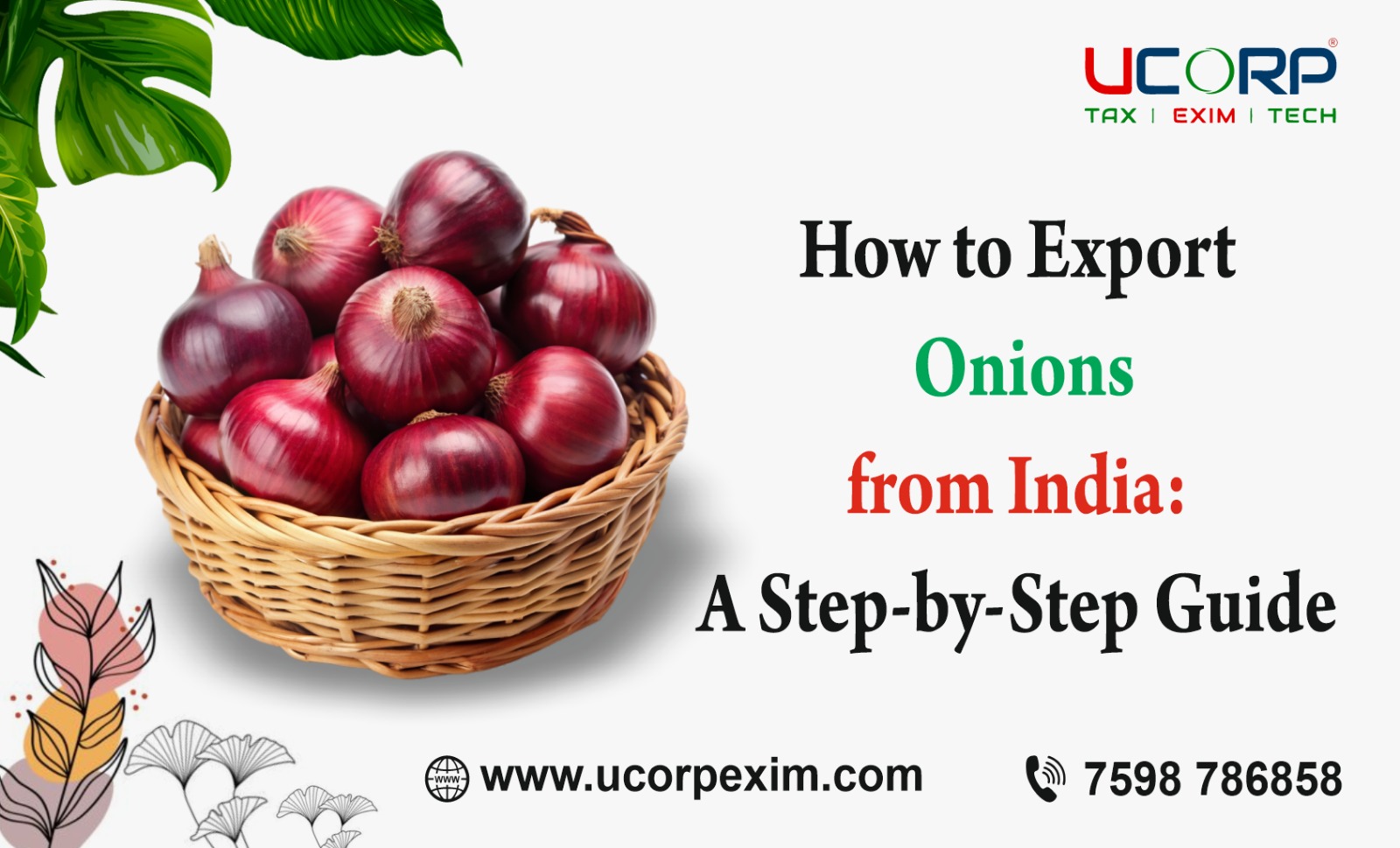
Exporting Onions from India: Procedures, Documentation & Tips
Exporting Onions from India: Procedures, Documentation & Tips?
India is one of the top producers and exporters of onions globally. Major importing countries include Bangladesh, UAE, Malaysia, Sri Lanka, and Nepal. The export of onions is sometimes subject to bans or minimum export prices (MEP) based on domestic supply and price stability.
1. Business Registration
Register your business as a legal entity: Proprietorship, Partnership, LLP, or Private Limited Company.
Get a PAN card for your business.
2. Obtain Importer Exporter Code (IEC)
Mandatory for any export/import activity.
Apply through the DGFT (Directorate General of Foreign Trade) portal.
3. Register with APEDA
Agricultural & Processed Food Products Export Development Authority (APEDA) registration is essential.
4. Understand Export Policy for Onions
Onions fall under restricted or free categories depending on government policy.
Check the DGFT notifications regularly for updates on bans, quotas, or MEP (Minimum Export Price).
5. Product Sourcing and Grading
Procure from registered APMC markets or farmers.
Ensure quality as per international standards – size, dryness, skin, and pungency.
6. Packaging and Labeling
Use standardized packaging: mesh bags (5kg/10kg/25kg/50kg).
Label must include: Product name Country of origin Net weight Exporter details
Handling instructions
7. Quality Inspection & Certification
Get a Phyto-sanitary Certificate from the Plant Quarantine Department (if required by the importing country).
APEDA may require a certificate of origin.
8. Logistics and Shipping
Book a container (usually reefer or dry containers for short distances).
Port handling through clearing and forwarding agents (C&F).
Choose between sea freight (most common) or air freight (for premium or urgent shipments).
Key Documents Required
Document * Purpose
IEC (Importer Exporter Code) Mandatory for all exports
APEDA Registration For agro product exports
Invoice & Packing List For customs and buyer
Bill of Lading / Airway Bill Shipping document
Certificate of Origin Confirms country of origin
Phytosanitary Certificate Ensures the product is pest-free
Fumigation Certificate Required for some countries
Letter of Credit / Purchase Order From the importer
Shipping Instructions For the freight forwarder
Tips for Successful Onion Export
1. Stay Updated on Export Policies
Onion exports can be banned or restricted suddenly. Check DGFT/APEDA updates regularly.
2. Build Relationships with Reliable Farmers
Ensure consistent quality and supply by working closely with suppliers.
3. Focus on Quality and Shelf Life
Poor storage leads to rotting or sprouting. Ensure proper drying and ventilation during transport.
4. Understand Market Preferences
Different countries prefer different onion varieties – red, white, or shallots.
5. Partner with Reputable Freight Forwarders
They can help with customs clearance, packaging, and logistics.
6. Consider Export Promotion Councils
APEDA and other bodies can assist with trade fairs, buyer-seller meets, and subsidies.If you are a fresher in the Business.
Join our Startup Export Training .
For more details.
Visit www.ucorpexim.in or Contact 7598 404848
If you have basic about the Export Business.
Join our Advanced Realtime Export Training.
For more details.
Visit www.ucorpareto.com or Contact 7598 424848
#export #exporter #exportimport #exports #importexport #exportproduct #exportbusiness #exportbag #exportquality #exportindia #exporting #exportimportdata #eximedia #indiaexport #indiaexports #indiaexporters #indiaexportimport #indiabusiness #ucorpexim #exporttraining#exportstraining #exportertraining #exporterstraining #importtraining #importstraining #importertraining #importerstraining #ucorp

share News