


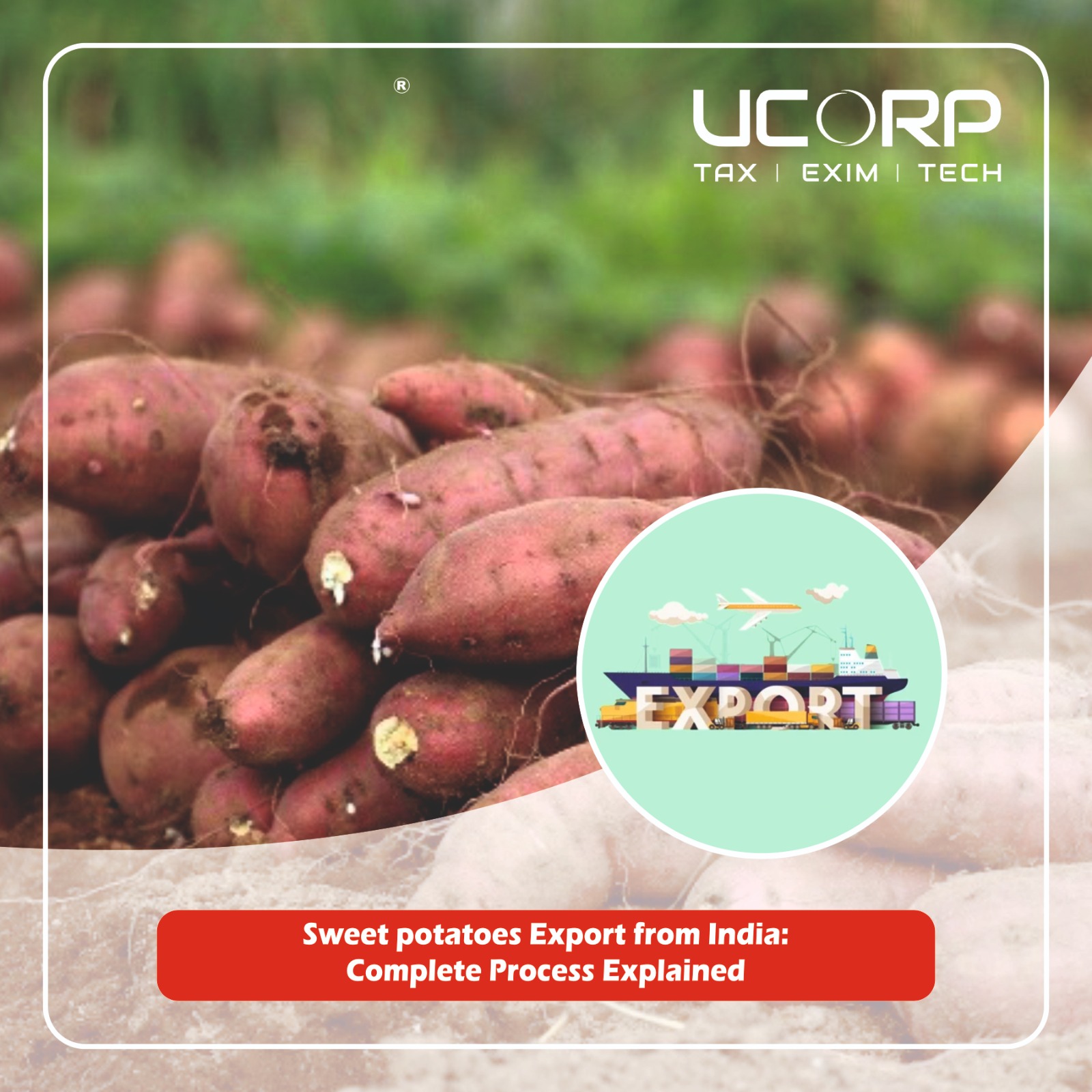
Sweet potatoes Export from India: Complete Process Explained
Exporting sweet potatoes from India involves several key steps including market research, compliance with export regulations, quality control, logistics, and documentation. Here's a complete breakdown of the process:
1. Market Research and Planning
Identify Target Markets: Common destinations for Indian sweet potatoes include the UAE, UK, Netherlands, Malaysia, and Saudi Arabia.
Study Market Requirements: Understand the specific quality, packaging, and phytosanitary requirements of the target country.
Competitor Analysis: Study competing exporters and pricing trends.
2. Business Registration and Licensing
Register Your Business: Obtain a valid business license (e.g., sole proprietorship, partnership, or private limited company).
Get an Importer Exporter Code (IEC): Mandatory for exporting from India, issued by DGFT.
Register with APEDA: The Agricultural and Processed Food Products Export Development Authority registration is mandatory for agro-exports.
3. Sourcing and Quality Control
Source Sweet Potatoes: From farms with good agricultural practices (GAP).
Ensure Quality Standards: Sweet potatoes should be fresh, clean, mature, and free from pests and diseases.
Pre-Harvest/Harvest Inspection: Coordinate with a quality inspector if required by the destination country.
4. Processing and Packaging
Sorting and Grading: Based on size, shape, and quality.
Cleaning: Remove soil and debris.
Packaging: Use export-grade, food-safe, ventilated cartons or crates. Proper labeling is mandatory (product name, country of origin, weight, etc.).
Cold Storage: Store in a temperature-controlled environment to maintain freshness.
5. Certification and Documentation
Phytosanitary Certificate: Issued by the Plant Quarantine Division.
Fumigation Certificate (if required): For pest control.
Certificate of Origin: Issued by Chambers of Commerce.
Packing List & Invoice
Bill of Lading or Airway Bill
Insurance Documents
6. Logistics and Shipping
Choose Mode of Transport: Air (for quick delivery) or sea (more economical for bulk).
Customs Clearance: File shipping bill with Indian Customs and clear export formalities.
Freight Forwarder: Helps manage transport, documentation, and customs.
7. Post-Export Activities
Follow Up With Importer: Ensure the product meets expectations.
Payment Collection: Through LC (Letter of Credit) or TT (Telegraphic Transfer) as agreed in the contract.
Maintain Records: For audit and reference.
Additional Tips
Join Export Promotion Councils: Such as APEDA or FIEO for support and leads.
Use Trade Portals: Like Alibaba, TradeIndia, and IndiaMART to connect with buyers.
Stay Updated: Export norms and phytosanitary rules change frequently.
If you are a fresher in the Business.
Join our Startup Export Training .
For more details.
Visit www.ucorpexim.in or Contact 7598 404848
If you have basic about the Export Business.
Join our Advanced Realtime Export Training.
For more details.
Visit www.ucorpareto.com or Contact 7598 424848
#export #exporter #exportimport #exports #importexport #exportproduct #exportbusiness #exportbag #exportquality #exportindia #exporting #exportimportdata #eximedia #indiaexport #indiaexports #indiaexporters #indiaexportimport #indiabusiness #ucorpexim #exporttraining#exportstraining #exportertraining #exporterstraining #importtraining #importstraining #importertraining #importerstraining #ucorp
share News