


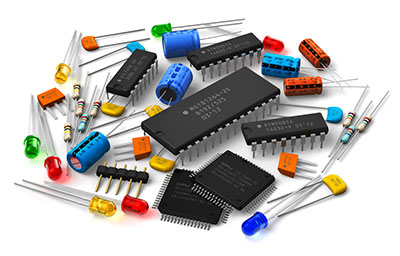
India's Med-Tech Exports Could Hit $20 Billion By 2030
"India is well-positioned to benefit from this shift, leveraging its strengths in software, hardware, and a cost-effective labour force compared to China," Baid said
India’s medical technology industry is projected to reach exports of up to $20 billion by 2030, but the sector requires additional government incentives and improvements in the ease of doing business to accelerate overseas shipments, the Confederation of Indian Industry (CII) stated.
Himanshu Baid, Chairman of CII’s National Medical Technology Forum, stressed the need for the Production Linked Incentive (PLI) scheme—currently available for select medical devices—to be extended across a broader range of products.
He also called for export incentives to help offset hidden manufacturing costs. "Today, we are importing almost 60 to 70 per cent of our medical equipment, which are needed in the country.
Whereas, our manufacturing is still very low as around 30 per cent is only manufactured in the country. Our imports are far exceeding our exports. Our imports are almost $8 billion, and our exports are close to $4 billion," Baid explained.
Despite these challenges, Baid expressed confidence in India’s potential to grow its med-tech industry, particularly as the global "China plus one" strategy encourages diversification of supply chains beyond China. "India is well-positioned to benefit from this shift, leveraging its strengths in software, hardware, and a cost-effective labor force compared to China," he said.
Baid projected that India's med-tech exports could reach between $15 billion and $20 billion by 2030, while imports could reduce from $8 billion to around $3 billion to $4 billion.
To achieve this, he stressed the importance of easing business regulations, removing overlapping rules, and addressing the challenges posed by the Quality Control Orders (QCO) that are currently hindering the "Make in India" initiative and exports.
Baid highlighted that the medical devices industry, governed under the Drugs and Cosmetics Act, is currently regulated alongside pharmaceuticals. He called for a separate regulator for medical devices, citing the sector’s complexity due to its combination of electronic, mechanical, and plastic components, which differ significantly from the chemical and pharmacopeial focus of the pharma industry.
Regarding the QCO issue, Baid pointed out that the requirement for raw material suppliers to register with the Bureau of Indian Standards (BIS) before importing products creates barriers for local manufacturers.
The small suppliers of raw materials often lack the resources to go through BIS registration, which contradicts the government's 'Make in India' push. “We’re asking for an exemption from QCO requirements for the med-tech industry,” he said.
If you are a fresher in the Export field.
????Join our Startup Export Training.
For more details.
???? Visit www.ucorpexim.in or Contact 7598 404848
If you have basic about the Export field
????Join our Advanced Realtime Export Training.
For more details.
????Visit www.ucorpareto.com or Contact 7598 786858
#export #exporter #exportimport #exports #importexport #exportproduct #exportbusiness #exportbag #exportquality #exportindia #exporting #exportimportdata #eximedia #indiaexport #indiaexports #indiaexporters #indiaexportimport #indiabusiness #ucorpexim #exporttraining#exportstraining #exportertraining #exporterstraining #importtraining #importstraining #importertraining #importerstraining #ucorp
share News